
Fahmeena creates clear and practical content across digital marketing, technology, business growth and emerging digital trends.

Sameena reviews digital content for clarity, factual presentation, consistency and overall reader usefulness.
About Inbound Marketing Process
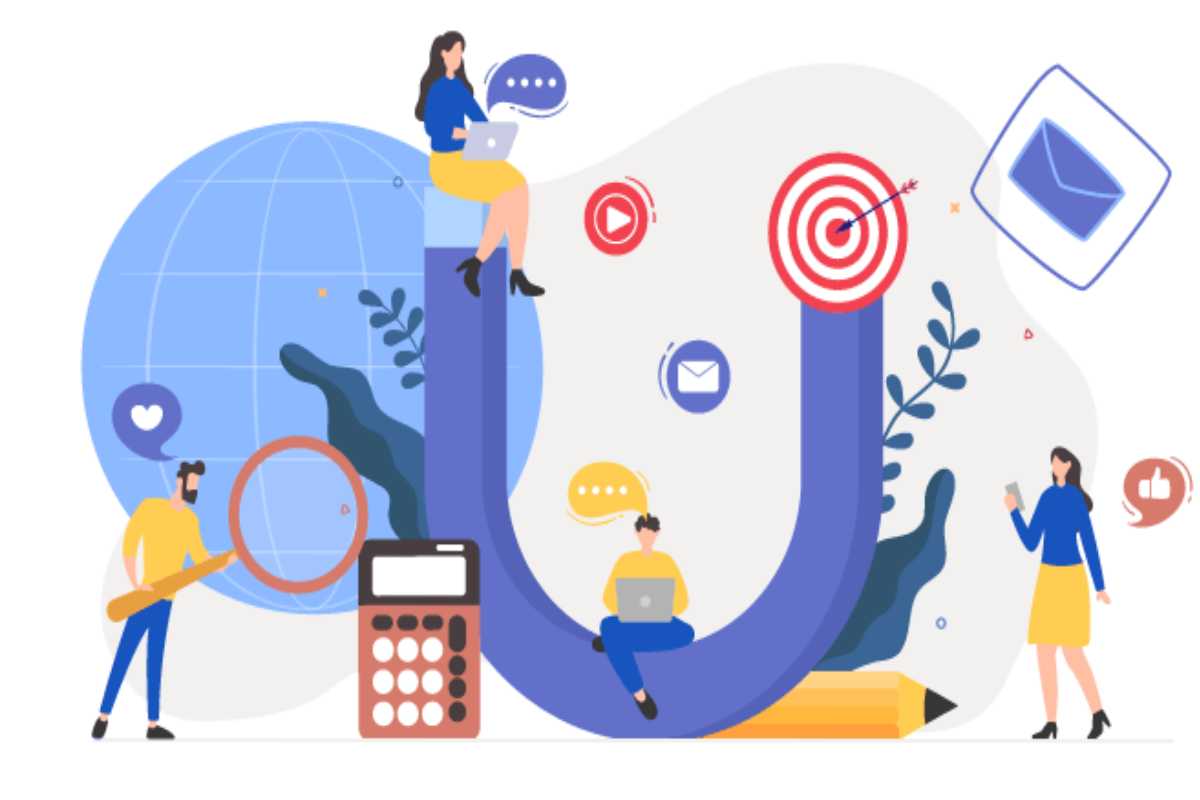
Inbound marketing process: Inbound marketing is a technique used to entice potential customers non-invasively. Therefore, the technique is also known as magnetism marketing and inbound marketing. And in the digital age, it’s more accurate than traditional marketing techniques. This is known as outbound marketing.
The differences go beyond modern versus traditional technology. Because the relationship between potential customers, advertising measures, and the company is changing. And to form a closer relationship with the customer, inbound marketing considers the customer’s decision stages. As well as the data collected by Google Analytics to create a personalized customer experience.
Against the marketing strategies of large companies that, because of their brand image and level of awareness, can afford to spread their messages to the four winds. Digital marketing for local businesses capitalizes on inbound strategies to maximize results with much less advertising spending. This allows potential customers to find your business online on a tight budget.
📈 This article is part of our
Inbound & Lead Marketing
Differences between Inbound and Outbound Marketing Process
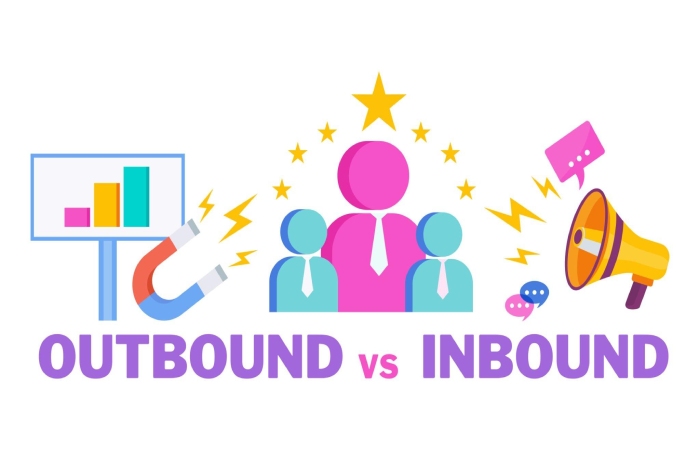
Although we do not trust that inbound and outbound marketing are two exclusive concepts, they could be part of the same movements. There are some fundamental differences that we explain below:
- Outbound marketing uses old-style media to spread your customers, such as radio, television, or newspapers. In difference, inbound marketing uses digital media, such as blogs, social media, or search engines.
- Outbound focuses chiefly on the brand and product, while inbound focuses on the user and view.
- While communication is unidirectional in outbound marketing due to the average used, there is more communication in inbound marketing, and communication is bidirectional.
- Outbound marketing campaigns tend to be more massive and target large audiences, though inbound marketing campaigns are more segmented and target spectators.
- It is unnecessary to directly associate paid advertising with outbound since cases like B. Search engine ads qualify as inbound marketing because they only appear when a user performs a search.
- As in the previous point, some offline advertising instances qualify as inbound marketing, e.g., B. When a person calls a company and requests information because he saw an ad on a marquee.
Benefits of Inbound Marketing Process
Once visitors become leads, consistent lead nurturing helps build trust, provide relevant information, and move prospects closer to making a purchase decision.
- Our inbound marketing system guarantees increased sales and the profitability of your advertising investments.
- We improve all your digital actions and unify them in an optimized global strategy.
- You save time by automating communication with your customers.
- Your old customers will come back. And you have more business opportunities to attract new customers.
- We improve your brand image on the Internet.
- Your campaigns will be natural and dynamic. Adapted to each moment and personalized for each group of clients.
Why Inbound Marketing?
A successful inbound strategy should also focus on lead quality in sales, ensuring that marketing efforts attract prospects who are more likely to become valuable customers.
Vision Range
Drive more traffic to your website so your business can reach more potential customers. The visibility of your website is crucial because the best website is useless if nobody visits it. How do you get more web traffic? With a strategy of:
- SEO positioning, content marketing, social media promotions, and advertising campaigns.
Catchment Area
Once the traffic reaches your website, you need to convert the visitors into leads—the generation of data for contact with potential customers (information). And you can accompany your customers in their purchase process naturally. How are tips registered?
- UX web design, CRO of landing pages (forms, CTAs), customer conversion flow, A/B testing.
Loyalty
You already have a database of potential customers. So the next step is to get those customers to come back and close the sale. You can manage your customers and analyze your online business data thanks to marketing tools.
- Lead Scoring, Email Marketing, Sales Alert, Web Sync, and CRM.
Promoter
The cycle begins again, thanks to the trust accumulated in the previous steps. Your happiest customers are promoters of your online business, which will generate more traffic for your website. Then the process can start again. For a customer to be satisfied, it is best to:
- Social media management, analysis, performance (ROI), satisfaction surveys, and marketing automation.
Inbound Marketing vs. Outbound Marketing
Understanding your audience’s needs and challenges is essential, which is why marketing empathy can help brands create more relevant and meaningful experiences for potential customers.
Inbound Marketing
- Attract customers naturally
- Accompany the client throughout the process
- It has a methodology for each moment
- Use multiple tools together
- Analyze the data to optimize the process
Outbound marketing
- Find random customers
- Abandon the client when reaching the goal
- Use the same tricks with everyone.
- Tools are not connected.
- Just analyze the results
Keys to Inbound Marketing Process
Putting the audience first is becoming increasingly important, making human-centered marketing a valuable approach for creating authentic connections throughout the inbound journey.
Quality content that meets needs and stimulates conversation is the foundation of a good inbound marketing campaign. To attract your customers, you must take care of the texts, images, and videos on your website, email communications, and social networks. In other words, attraction marketing must be supported by content marketing.
You also have to bet on SEO positioning. Reach customers when they are looking for a solution to a need. The first step is to find your SEO mistakes and fix the ones that significantly impact search engine results. Then you need to reinforce the content with good keyword design and optimal page performance for easy visibility on mobile phones. And it structures the content so that Google knows how each page is related. That means building pillar pages that have a robust semantic connection.
Each potential customer that visits your website has their own goals and needs. And it behaves differently. Therefore, you must offer each customer a personalized experience. To make the personalization process more manageable, you should work with ideal clients, known as buyers. They help understand what customers are looking for and expect—combined with the customer journey to understand where each perfect customer is in the buying journey. You can further customize the goal you want to achieve with each action.
Also, the next step in the process is to make it easier for the customer to get to the point on your website where they become a potential customer. So, it would help if you improved conversion with CRO techniques in inbound marketing. That means optimizing every process that gets a customer to provide their data. This increase leads by driving more qualified traffic to the page and makes it easier for potential customers to leave their details. Remember that your content has value, and visitors will give up their data if it warrants it.
How do you know that attraction marketing works? With the in-depth study of the data. That means web analytics is well implemented. This allows learning about the flow of visitors; the actions carried out on the web and the result of the conversions. But the data alone says nothing. It is necessary to draw conclusions from the study of the situation and make the appropriate changes to improve it.
Client Management
Before exploring the individual stages of the process, it can be helpful to understand what inbound marketing is and how it differs from traditional marketing approaches.
As in any business, you have to know how to differentiate between customers who are going to buy and those who are not so clear—investing your resources in the best prospects. And in digital marketing, it is easier to quantify a client’s potential, and it is known in inbound marketing as a lead scoring lead score. Thanks to these objective criteria, you can decide which clients should receive advertising campaigns.
The following step is to take care of the customer through a lead nurturing tool so that they continue to trust the online business. It consists of your client knowing the services and products that interest him. This is achieve by automating communication, creating personalize lists, and segmenting within the customer database. And it is combine with the client’s behavior to know if he is responding well to your communications.
Conclusion
The inbound marketing process encourages the “right kind” of customers to seek out your business because they enjoy the content you produce. Once inbound marketing customers contact you, please encourage them to make a sale and continue to delight them for life.
Fahmeena Begum is a Digital Marketing & Technology Writer at Web Digi Marketing with 3+ years of writing experience. Her work covers digital marketing, SEO, content marketing, business growth, digital tools, artificial intelligence, software and emerging technologies.
View Author Profile →
Sameena Begum is a health, technology and digital content reviewer with 8 years of experience. Her review work focuses on editorial clarity, factual presentation, consistency and reader usefulness across technology and digital subjects.
View Reviewer Profile →