
Last Updated: June 22, 2026
Introduction
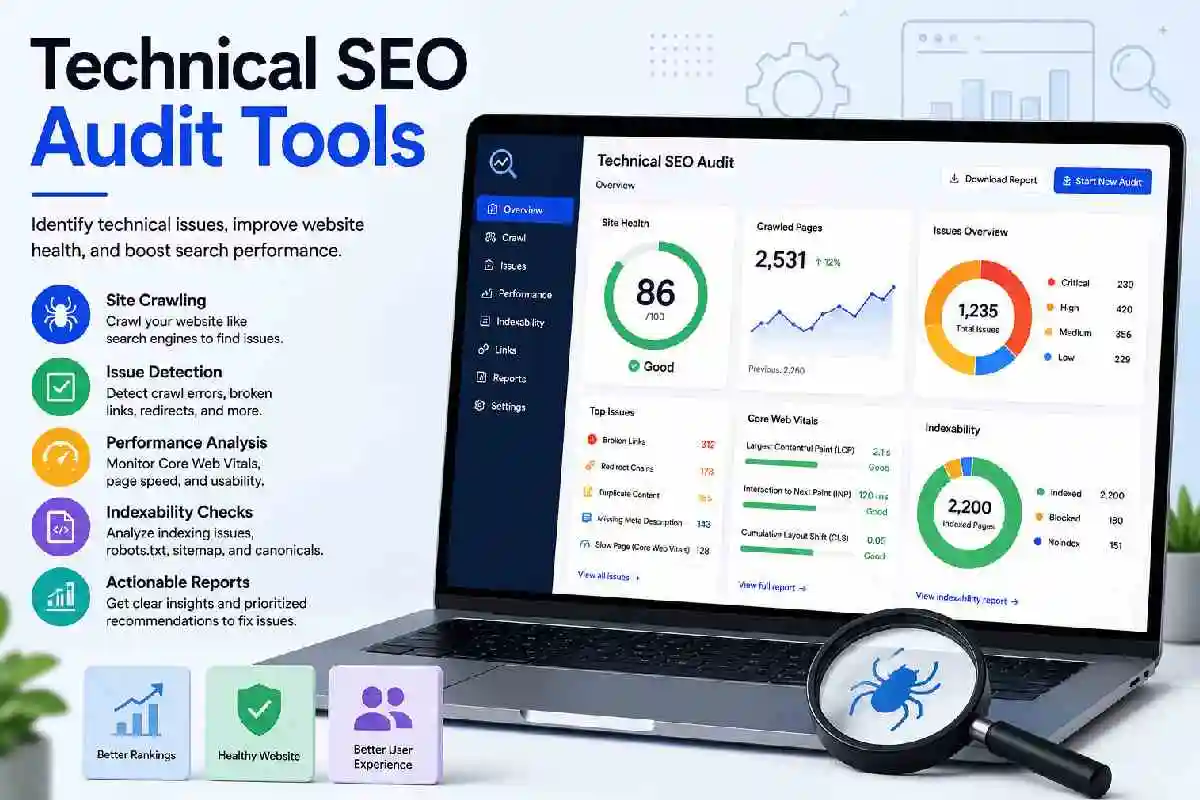
It is vital for any company to utilize technical SEO audit tools in order to ensure proper performance of the website in terms of ranking on search engine results pages, providing an excellent user experience, and improving overall crawling processes. No matter what type of website is managed, it can be either a small company website, an online store, or an enterprise platform; such tools will help to reveal a variety of issues, including broken links, crawling errors, duplications, page speed problems, and indexing difficulties. In 2026, search engines still value the performance of websites, as well as Core Web Vitals.
What Are Technical SEO Audit Tools?
Technical SEO audit tools are computer applications that assess the condition of a website and pinpoint issues related to crawling, indexing, and ranking by the search engines. The use of such tools allows website owners, digital marketing experts, and SEO specialists to find issues that might negatively impact website rankings and performance. Through automated assessments, technical SEO audit tools help to identify ways to increase website performance and SEO compliance.
Functions of Technical SEO Audit Tools
- Broken link checker
- Site speed and Core Web Vitals analyzer
- Duplicate content finder and metadata validator
- Crawl issues and indexing analysis
- XML sitemap verification and Robots.txt analyzer
- Structured data analysis
- Redirects and server error detection
- SEO audit report generation with actionable advice.
Who Uses Technical SEO Tools?
| User Type | Primary Goal |
| SEO Specialists | Site optimization |
| Digital Marketers | Improve rankings |
| Agencies | Client audits |
| Website Owners | Fix technical issues |
| Developers | Improve site architecture |
Essential Features of SEO Audit Software
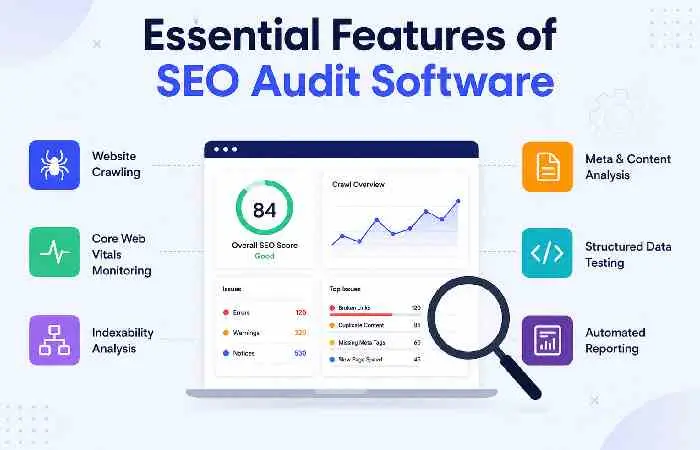
It provides an opportunity for businesses to analyze technical elements of their site in order to improve them. The best software for SEO provides a detailed analysis of the state of websites, enabling marketing specialists to identify any potential issues. Modern SEO auditing tools are provided with automated reporting features and continuous monitoring capabilities.
Website Crawling and Analysis
Effective crawling of a website is crucial when conducting an SEO audit. It allows software to check website pages and find all kinds of technical issues that may influence its ranking positions.
Top capabilities:
- Broken link detection
- Duplicate content detection
- Metadata detection
- Internally linked pages analysis
Core Web Vitals Monitoring
The page experience is still one of the biggest ranking factors in 2026. SEO audit software helps analyze various metrics that have an impact on users’ experience and ranking positions.
Some popular metrics include:
- Largest Contentful Paint (LCP)
- Interaction to Next Paint (INP)
- Cumulative Layout Shift (CLS)
- Mobile usability performance
Indexing and Crawlability Checks
Such functionalities guarantee that search engines are able to crawl and index certain website pages.
Popular indexing and crawling checks include:
- Robots.txt checking
- XML sitemap analysis
- Noindex tag detection
- Canonical URL checking.
Automated Reporting and Recommendations
Sophisticated SEO software produces user-friendly reports with prioritized suggestions to correct problems.
Advantages are:
- Increased efficiency through automation
- Tailored audit reports
- Monitoring of progress
- SEO insights that can be acted on
Schema and Structured Data Validation
Structured data assists search engines in interpreting content and showing richer results in search pages.
Validation services include:
- Schema markup validation
- Rich result eligibility testing
- Detection of structured data errors
- JSON-LD validation.
Feature Comparison Table
| Feature | Basic Tools | Advanced Tools |
| Site Crawl | Yes | Yes |
| Core Web Vitals | Limited | Advanced |
| Schema Testing | Basic | Comprehensive |
| Log File Analysis | No | Yes |
| Competitor Analysis | Limited | Extensive |
| Automated Reports | Basic | Customizable |
How Technical SEO Tools Improve Website Performance
There are several reasons why technical SEO tools play a key role when making improvements in websites. Technical problems, such as errors, can cause obstacles in the crawling and indexing processes. The improvements offered will help the sites load faster and get more traffic.
Faster Websites
The first major advantage of technical SEO tools lies in their ability to optimize websites. Technical SEO tools reveal information about website optimization.
Here are some optimizations performed by technical SEO:
- Larger images
- Reducing JS code
- Not having many redirects
- Better responses from servers
Optimization of Crawling and Indexing
Technical SEO tools also have the benefit of helping search engines crawl and index websites professionally.
Improved Usability
A number of technical SEO tools are meant for finding problems related to website usability. Increased page speed and optimized design contribute significantly to user engagement.
Higher Positions in SERPs
Technical SEO problems being sorted out will make room for higher locations. Formerly, all other SEO does, such as connection building, become more real.
Impact of Technical SEO Fixes (Industry Benchmarks 2026)
| Optimization Area | Average Improvement |
| Page Speed | 25%–45% |
| Crawl Efficiency | 30%–50% |
| Mobile Performance | 20%–40% |
| Organic Traffic Growth | 10%–35% |
| Index Coverage | 15%–30% |
Common Technical SEO Issues These Tools Detect
Technical SEO audit tools are designed for identifying any technical issues that could affect ranking, the crawling process, and the website experience. These reviews allow governments to fix issues exposed and ensure they are enhanced technically. The technical audit plays a vital role in ensuring there will not be performance drops and making it easier for the engines to access important information.
Issues like Broken Links and Crawl Errors
The technical issues here are not just frustrating for users but also result in wasted crawl budget. The technical SEO tools make it easy to identify any issues with 404, server errors, etc.
Duplicates Issue
Here, we find a situation where the same page exists in duplicate on the website. It confuses the search engines’ end due to diluted ranking signals. These issues can be identified using technical audit tools.
Crawling and Indexing Problems
These include issues related to indexing and accessing website pages by search engines. Some examples include blocked URL, faulty robot file, no XML file, etc.
Loading Page Time and Core Web Vitals
Loading delays could harm your rankings and negatively affect visitor interaction on the website. Software used to evaluate your SEO can identify slow-loading pages, large image files, blocking of rendering, and poor ratings of Core Web Vitals.
Redirect and Canonical Problem
Technical SEO problems, such as redirect problems and canonical errors, could cause problems with indexing. SEO analysis software detects redirect problems like loops and chains, as well as incorrect use of canonical URLs.
Missing/Incorrect Meta Tags
Metadata assists search engines in understanding the content within the web page. SEO tools can contribute to detecting pages that lack titles, duplicate images, and more than one H1 tag.
Structured Data and Schema Errors
Structured data assists web pages in qualifying to appear in rich search results. SEO software tools check for schema errors and detect errors that will affect the interpretation of website content.
Technical SEO Issues Priority Matrix
| Issue | SEO Impact | Fix Priority |
| Indexing Errors | High | Immediate |
| Broken Links | High | Immediate |
| Redirect Chains | Medium | High |
| Duplicate Content | High | High |
| Missing Metadata | Medium | Medium |
| Slow Pages | High | High |
Best Technical SEO Tools for Marketers

Technical SEO tools allow marketers to troubleshoot problems with their websites, increase visibility through search engines, and improve their website performance overall. These tools provide valuable information that can be used to create an effective SEO strategy using data. Deciding on which tool to use is a matter of budget and technical know-how.
| Tool | Best For | Key Features | Pricing |
| Ahrefs Site Audit | SEO Professionals | Site health monitoring, crawl analysis, issue prioritization | Premium |
| Semrush Site Audit | Digital Marketers | Automated audits, technical recommendations, and reporting dashboards | Premium |
| Screaming Frog SEO Spider | Technical SEO Experts | Advanced website crawling, custom extraction, JavaScript rendering | Free & Paid |
| Sitebulb | Agencies & Consultants | Visual audit reports, website health scoring, and client-friendly insights | Paid |
| Google Search Console | Website Owners | Index coverage reports, performance tracking, and Core Web Vitals data | Free |
| Google PageSpeed Insights | Performance Optimization | Speed testing, Core Web Vitals analysis, and improvement suggestions | Free |
| GTmetrix | Website Speed Audits | Page performance monitoring, waterfall analysis, speed reports | Free & Paid |
Conclusion
Tools used in Technical SEO Audits have an important part to play when it comes to keeping your websites healthy and enhancing their performance. As search engine algorithms keep changing in 2026, companies that keep a close watch on how they are faring when it comes to technical SEO can easily outperform others. From using basic tools such as Google Search Console to more advanced ones, including Ahrefs, Semrush, Screaming Frog, and Sitebulb, the importance of regular auditing cannot be ignored. With technical audits in combination with good content and links, you can create great websites for traditional and AI-driven search engines.