
Fahmeena creates clear and practical content across digital marketing, technology, business growth and emerging digital trends.

Sameena reviews digital content for clarity, factual presentation, consistency and overall reader usefulness.
Introduction
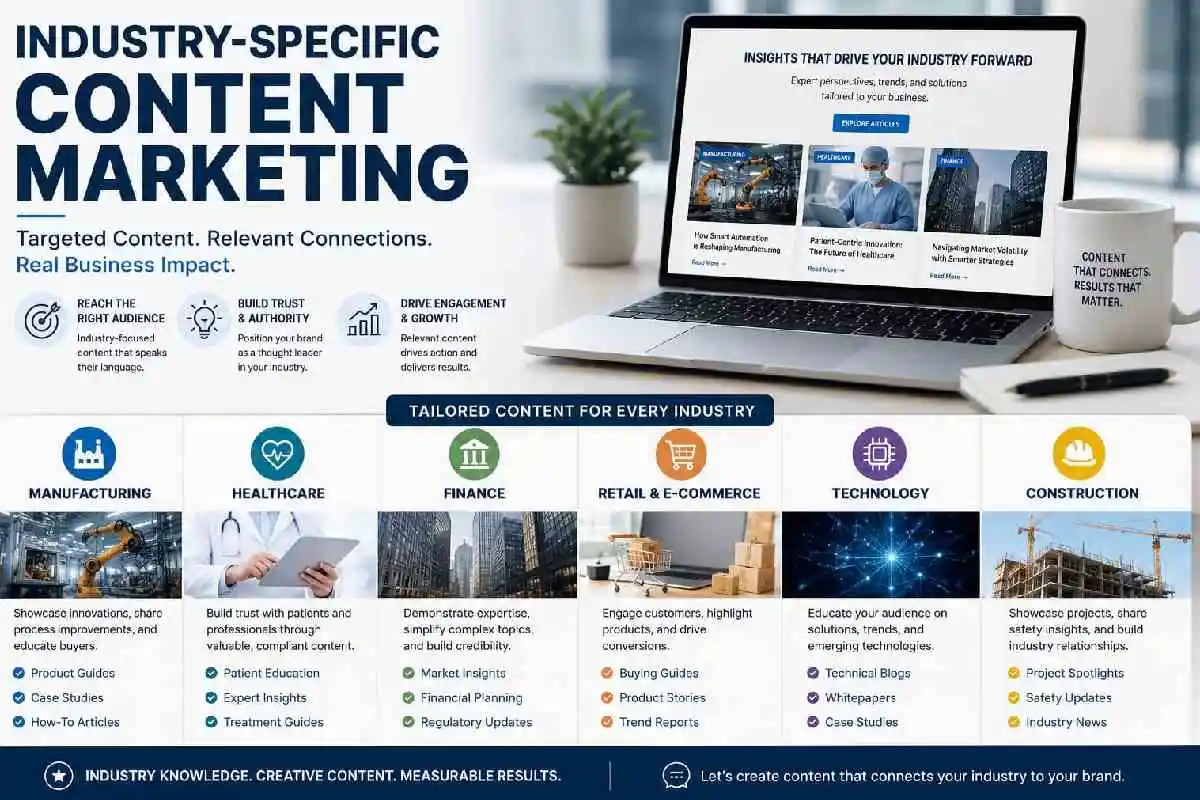
Industry-Specific Content Marketing is one of the types of content marketing in which marketing techniques are implemented considering peculiarities of specific industries including healthcare, software as a service (SaaS), real estate, eCommerce, and other niches. As compared to other types of content, in this case, businesses create content that is tailored specifically to their customers’ needs and can be used not only for brand promotion but also for solving problems of their target audience.
Industry-focused campaigns work best when supported by comprehensive content marketing services that align content with audience needs and business objectives.
This type of marketing has become especially popular in 2026 due to increased competition, artificial intelligence-based SEO techniques, and enhanced focus on EEAT optimization. This will help the businesses to get qualified leads and promote their brands through relevant information. Ultimately, content marketing will become an accurate system of brand growth instead of just its additional method.
Industry-specific content should also leverage content conversion optimization to maximize lead generation opportunities.
📈 This article is part of our
Content Marketing
What Is Industry-Specific Content Marketing?
Industry-specific content marketing can be defined as the process of creating and optimizing content with regard to the requirements, problems, compliance, and user behavior of a particular industry.
Before creating niche-focused campaigns, it’s important to understand the basics of content marketing and how valuable content drives engagement.
Instead of generic blogs, businesses create:
- Healthcare content focused on trust & compliance
- SaaS content focused on demos & conversions
- Real estate content focused on listings & locality SEO
- E-commerce content focused on product intent
- Local business content focused on geo-targeting.
Understanding what content marketing is makes it easier to determine which formats, topics, and channels are appropriate for a particular industry.
Content Marketing Services for Healthcare
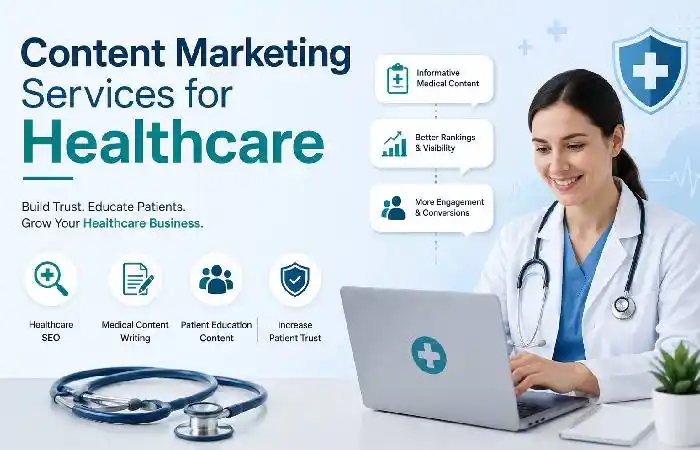
Healthcare Content Marketing Services consist of building a reputation based on trust, authority, and patient engagement by producing medically fact-driven and compliant healthcare content that ranks well online. As of 2026, the healthcare sector experiences high demands from the EEAT (Experience, Expertise, Authority, Trust) and YMYL (Your Money Your Life) rules regarding medical credibility, readability, and integrity of the content created. These types of services may assist in drawing more patients with the help of educational articles, service information pages, symptom explanations, and location-based SEO.
Industry-specific content becomes more effective when combined with SEO content marketing techniques that improve visibility for niche search queries.
Writing Medical Blogs
Medical blogging provides patient information on various diseases, their treatments, preventive measures, and general well-being. It will ensure organic traffic and create trust when mentioned by reliable medical websites.
Medical SEO Content
It refers to SEO services that include optimizing service, practitioner, and treatment pages in order to be found for searches like “best cardiologist in my area” or “treatment for diabetes.”
Patient Education Content
Medical content aimed at breaking down difficult concepts for patients to understand more easily without getting too technical.
Medical Website Copywriting
Professional medical website copy for clinics and hospitals that covers homepage copywriting, service page content, and doctor biographies.
Local SEO Services for Clinics
Geographically targeted SEO services that help clinics get found locally online.
Healthcare Content Marketing Services Overview
| Service Type | Purpose | SEO Impact | Conversion Impact | Example Use Case |
| Medical Blog Writing | Educate patients | High | Medium | “Symptoms of thyroid imbalance” |
| Healthcare SEO Content | Improve rankings | Very High | High | “Best ENT hospital in Hyderabad” |
| Patient Education Content | Build trust | Medium | High | Post-surgery care guides |
| Hospital Website Content | Brand authority | High | Very High | Service + doctor profile pages |
| Local SEO Content | Increase nearby visibility | Very High | Very High | “Dental clinic near me” |
Content Marketing for Real Estate Businesses
Content marketing related to real estate is all about gaining leads through geo-targeting, intent-based, and high-quality content. In 2026, the key to successful real estate marketing would be local SEO, Google Maps listings, and keyword-based targeting for your location. The businesses use content marketing to promote their listings, attract visitors by highlighting benefits associated with the neighborhoods, and establish credibility among their target audience using investment guide posts and market analysis posts. Well-planned blog posts and optimized landing pages make sure that people are captured throughout various stages of their purchase journey.
When properly planned and consistently executed, the benefits of content marketing can include stronger brand awareness, increased organic visibility, improved audience engagement, and more qualified leads.
| Content Type | Purpose | SEO Value | Lead Impact | Example Topic |
| Location Guides | Build a local authority | Very High | High | “Best areas to live in Hyderabad 2026” |
| Property Listing Pages | Drive direct sales | Very High | Very High | “3BHK apartments in Gachibowli” |
| Investment Blogs | Attract investors | High | Medium-High | “Is real estate still profitable in 2026?” |
| Comparison Content | Help decision-making | High | High | “2BHK vs 3BHK: which is better?” |
| Virtual Tour Content | Improve engagement | Medium | Very High | “Modern villas walkthrough” |
Content Marketing for SaaS Companies
It can be considered a typical funnel model where leads are captured, educated, and converted into loyal subscribers. Content marketing in 2026 will center around PLG, comparison SEO, and AI-generated user onboarding content for SaaS companies. The focus is not merely on traffic but also on the conversion of such traffic through free trials, demo requests, and conversions into paid subscriptions. Effective SaaS content marketing involves the use of strategic content throughout the entire buyer’s journey, starting from blogs to product comparisons and conversion-oriented landing pages.
A successful niche campaign should be guided by a clear content marketing strategy that targets specific customer segments and goals.
TOFU (Top of the Funnel) Educational Content
It helps to draw in new prospects by providing informative blog posts such as “What is CRM Software?” or “Why marketing automation is useful.”
Comparative Content – MOFU (Middle of the Funnel)
Enables the forecast to compare different products by creating blog polls like “HubSpot vs Zoho CRM” and “Best Project Management Tools For Startups.”
Conversion Mooring Pages – BOFU (Bottom of the Funnel)
High-determination pages that mainly emphasize demos, trials, pricing, and features.
Case Studies & Success Stories
Case studies about success stories and customer experience using the SaaS tool.
Product-Led Content & Product Tutorials
Educational content aimed at helping customers get the hang of the product itself.
Creating specialized content becomes easier when using detailed buyer personas for content marketing relevant to your industry.
Content Marketing for E-commerce Stores
Content Marketing for E-commerce Stores center around promoting the discovery, intention to buy, and repeat purchases by making use of SEO-oriented and conversion-based content. By 2026, e-commerce businesses would need to leverage AI-powered product descriptions, UGC (user-generated content), and shoppable content in blogs to make a mark in highly competitive industries. The idea behind this approach involves using category pages, guideposts for purchasing, and reviews to impact decision-making on each step of the funnel. Good content can also result in better placement of products on Google Shopping or in product searches.
- SEO-Optimized Product Descriptions: Product descriptions optimized with proper keywords and features.
- Purchase Guides and Comparisons: Articles designed for customers that will assist them when choosing among competitive products; an example of such is the choice of the best smartphones under ₹20,000.
- SEO-Optimized Category Pages: Pages optimized for volumetric keywords, such as men’s running shoes.
- Customer Generated Content (UGC): Customer reviews and ratings of your products.
- Shoppable Content and Blogging: Articles promoting your product through blogging and driving traffic to the products efficiently.
E-commerce Content Marketing Performance Table
| Content Type | Purpose | SEO Impact | Conversion Impact | Example |
| Product Pages | Direct sales | Very High | Very High | “Nike Air Max 2026 edition” |
| Buying Guides | Educate buyers | High | High | “Best laptops for students 2026” |
| Category Pages | Capture search traffic | Very High | High | “Women’s winter jackets” |
| UGC & Reviews | Build trust | Medium-High | Very High | Customer photo reviews |
| Shoppable Blogs | Drive impulse sales | High | Very High | “Top 10 skincare products” |
Content Marketing for Local Businesses
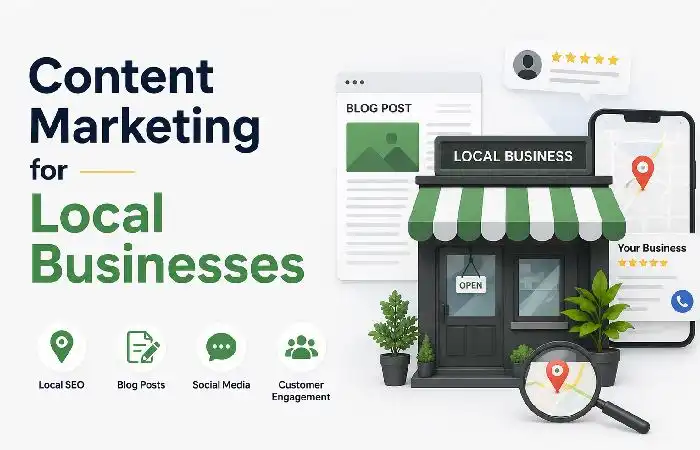
Local Businesses Content Marketing is a geo-targeted approach that aims at bringing in nearby clients by utilizing highly contextual and geographical content. For 2026, this marketing technique will help to improve visibility on Google Maps, “near me,” and voice search. It entails the generation of content by local businesses, including salons, clinics, restaurants, and service providers, in order to highlight products or services provided, develop authority through reviews, and gain ranking using specific location-based keywords. Local Businesses includes optimization of Google business profile content, local landing pages, and community blogs. It helps small firms compete with large firms within the geographical location.
Publishing expert-level industry content consistently can support authority building through content marketing and establish your brand as a trusted resource.
Local Content Marketing Strategies for Local Firms
- Google Business Profile Posts: Frequent posts to improve the local rankings.
- Local Landing Pages: Pages related to specific cities or locations, including keywords such as plumber in Vijayawada.
- Content Based on Reviews: To generate credibility through customer reviews.
- Content based on Service Area: Pages designed for the nearby area and locality.
- Local Blogs Content: Articles related to local community events and news.
Local Business Content Marketing Performance Table
| Content Type | Purpose | SEO Impact | Conversion Impact | Example |
| Google Business Posts | Improve map visibility | Very High | High | “Weekend discount offer update” |
| Local Landing Pages | Rank in city searches | Very High | Very High | “Best salon in Vijayawada” |
| Reviews & Testimonials | Build trust | Medium | Very High | Customer experience stories |
| Service Area Pages | Expand reach | High | High | “AC repair in nearby areas” |
| Local Blog Content | Engage community | Medium | Medium | “Top home care tips for summer” |
Industry-focused campaigns often require tailored content promotion and distribution strategies to reach niche audiences effectively.
Conclusion
Industry-based content marketing will be among the most effective SEO tactics to boost conversions in 2026 since it involves developing content that caters to the needs of an audience in the desired industry. Rather than relying on generic information, companies will develop content based on actual user intent for particular industries such as healthcare, software as a service (SaaS), real estate, e-commerce, and local services sectors. In so doing, they will not only enjoy better SEO ranking but will also experience more EEAT signals. Thus, organizations employing this marketing strategy will be able to gain a competitive advantage over other companies.
Developing specialized resources requires a structured content creation process focused on industry trends, challenges, and audience interests.
Many sectors are adopting AI content marketing solutions to improve efficiency and content personalization.
Fahmeena Begum is a Digital Marketing & Technology Writer at Web Digi Marketing with 3+ years of writing experience. Her work covers digital marketing, SEO, content marketing, business growth, digital tools, artificial intelligence, software and emerging technologies.
View Author Profile →
Sameena Begum is a health, technology and digital content reviewer with 8 years of experience. Her review work focuses on editorial clarity, factual presentation, consistency and reader usefulness across technology and digital subjects.
View Reviewer Profile →