
Fahmeena creates clear and practical content across digital marketing, technology, business growth and emerging digital trends.

Sameena reviews digital content for clarity, factual presentation, consistency and overall reader usefulness.
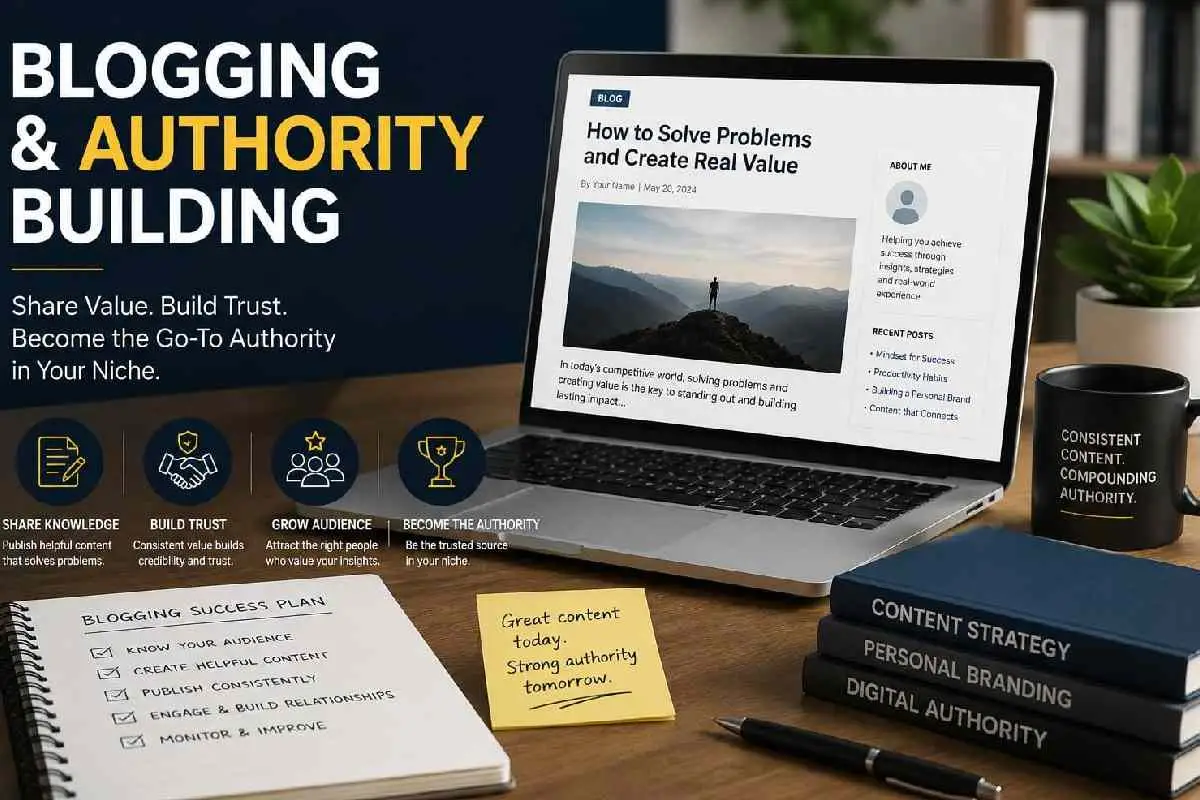
Blogging and authority building are super-connected in modern SEO. By 2026, Google will prefer sites constantly putting out amazing, experiential content instead of pages just stuffed with keywords. Companies that use smart blog strategies see their visibility soar in Google searches and AI-powered ones, too. Studies and competition analyses show that having an active blog really pays off – sites get way more organic traffic, backlinks, and quality leads compared to those that don’t post regularly.
Establishing industry authority requires a comprehensive approach that combines effective content marketing services with consistent publishing and audience engagement.
Establishing authority requires more than publishing content, making content promotion and distribution strategies essential for expanding reach and credibility.
📈 This article is part of our
Content Creation
Why Blogging Still Matters for SEO in 2026
Well, it lets your site rank for tons of related keywords instead of banking on just a handful of sales-oriented pages. Nowadays, search engines weigh topics’ depth, how well you link internally, and signs of expertise much more than just basic keyword use.
Before building brand authority, it’s important to understand the fundamentals of content marketing and how valuable content influences audience trust.
Websites publishing consistent high-quality blogs benefit from:
Increased keyword visibility
Better internal linking structure
Higher topical authority
More backlinks naturally earned
Improved AI Overview visibility
Better user trust signals.
Many brands now use AI content marketing solutions to support scalable authority-building efforts.
How Blogging Helps SEO Rankings?
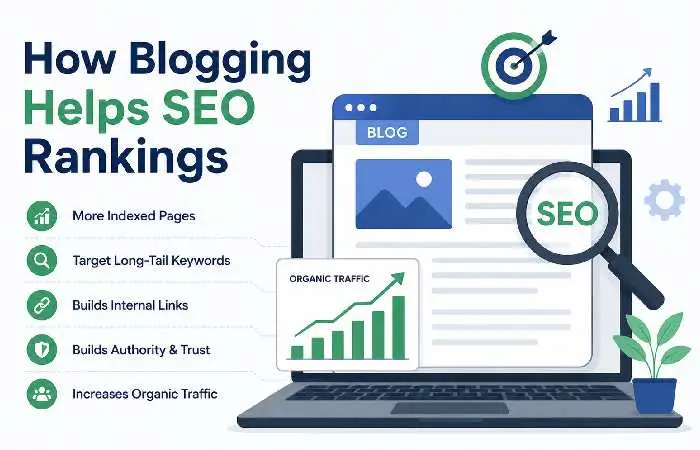
Blogging improves SEO because every article becomes an additional entry point into your website. Instead of ranking for only service pages, blogs target informational searches, long-tail keywords, and comparison queries.
Authority-building content performs best when supported by strong SEO content marketing strategies that improve search visibility and organic reach.
Improves Keyword Visibility
Blogs help target several keywords, not just depending on service or homepage rankings. By creating articles about related topics, businesses can appear in all kinds of searches – from informational to transactional and long-tail queries too.
Builds Topical Authority
It builds topical authority when you consistently publish blog content focused on one area. It brands your site to look like a skilled one, and search engines reward you accordingly.
Producing high-quality resources, guides, and thought leadership articles requires a structured content creation process focused on audience needs.
Increases Organic Traffic
Also, regularly updating your blog increases organic traffic over time. Evergreen articles continue drawing in visitors way past their initial posting date.
Supports Internal Linking Strategy
Lastly, blogs make it easier to link internally between key pages and supporting content. Not only does this guide crawlers and people through your site better, but it also shows search engines how all your topics relate.
Key SEO Benefits of Blogging
| SEO Benefit | Impact |
| Fresh content updates | Helps with indexing frequency |
| Internal linking | Improves crawlability |
| Long-tail keyword targeting | Easier rankings |
| Topical authority | Stronger niche trust |
| Backlink opportunities | Better authority signals |
| Featured snippets | Higher SERP visibility |
Thought leadership content becomes even more valuable when paired with content conversion optimization that drives measurable results.
How Often Should You Publish Blog Posts?
Posting blog entries regularly is way more vital than putting up tons of random content. Search engines like sites that update stuff often ’cause it shows they’re fresh and relevant. By 2026, most top sites plan their content around quality, topic fit, and connecting internally, not just pumping out everyday posts.
Consistency Matters More Than Quantity
Posting consistently actually builds up a site’s subject matter authority over time. Just putting up one good piece weekly helps with SEO, if it’s super useful, well-optimized, and connects to other related posts.
Recommended Blogging Frequency
How often you should blog depends on your business needs – some small companies do fine with less frequent updates, but really competitive markets might need new stuff more often.
High-quality website writing also helps establish expertise by making your website pages clear, useful, credible, and aligned with search intent.
| Website Type | Recommended Posting Frequency |
| Small Business Website | 1–2 posts weekly |
| Local Business | 2–4 posts monthly |
| SaaS Company | 3–5 posts weekly |
| Affiliate Website | 4–6 posts weekly |
| Enterprise Brand | Daily publishing |
Create a Content Calendar
It’s helpful to create a content calendar. It keeps your publishing consistent and stops random topics from cluttering your page.
Evergreen Content Marketing Examples
Evergreen content stands out, too. This kind of material stays super useful and relevant for longer periods. It keeps generating traffic, backlinks, and leads for months, or even years, after you post it. Evergreen content will still rock in 2026, giving you major topical authority and boosting your SEO rankings. This type of content helps with long-term organic growth, too.
Long-term authority growth depends on a well-defined content marketing strategy that aligns business goals with audience interests.
| Evergreen Content Type | Example Topic | SEO Benefit |
| Beginner Guides | “Complete SEO Guide for Beginners” | Long-term keyword rankings |
| Tutorials | “How to Start a Blog” | Consistent organic traffic |
| Checklists | “Technical SEO Checklist” | High engagement & shares |
| Case Studies | “How We Increased Traffic by 200%.” | Builds trust & authority |
| Comparison Posts | “Ahrefs vs Semrush” | Targets commercial intent |
| FAQ Articles | “Common Email Marketing Questions” | Featured snippet opportunities |
| Resource Lists | “Best Content Marketing Tools” | Internal linking support |
| Industry Glossaries | “Digital Marketing Terms Explained” | Topical authority growth |
Building trust with your audience starts by understanding detailed buyer personas for content marketing and addressing their needs.
Pillar Content vs Cluster Content
Pillar content and cluster content work together in SEO to show off a site’s know-how on a topic. A pillar page goes deep on a big keyword, while a bunch of articles zoom in on thinner parts of that same topic.
What is Pillar Content?
A pillar piece is a super detailed guide that tackles a broad keyword with lots of searches. It’s meant to be like the boss resource for learning about something.
What is Cluster Content?
Cluster content, on the other hand, is made up of shorter posts focusing on more specific parts of the main topic. They aim at long-tail keywords and make everything easier to navigate for readers and search bots.
| Factor | Pillar Content | Cluster Content |
| Purpose | Main authority guide | Supporting detailed articles |
| Keyword Target | Broad keywords | Long-tail keywords |
| Content Length | Long-form | Medium or short-form |
| SEO Goal | Build topical authority | Improve semantic relevance |
| Internal Linking | Links to clusters | Links back to the pillar |
| Example | “Complete SEO Guide” | “How Internal Linking Helps SEO” |
How to Build Topical Authority with Blogs
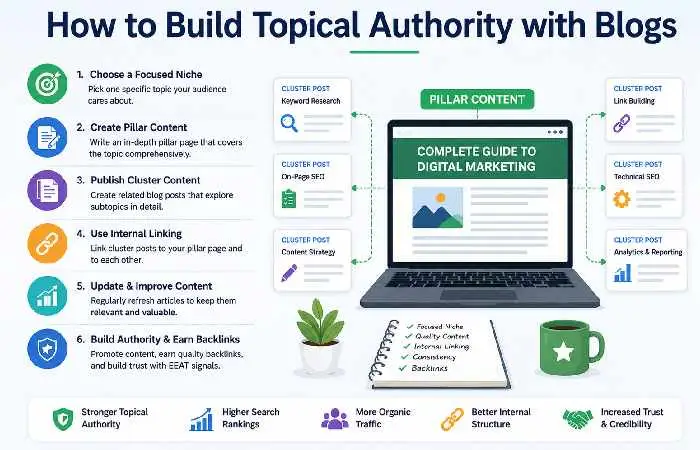
To build authority in 2026, you need a strong blogging game. Search engines love sites with consistent, top-notch content in one specific area. It’s not enough to crank out random articles anymore. You want to use things like internal linking, keyword bunches, and expert-written posts to really nail down your authority. Companies that use pillar pages, topical clusters, and stress on expertise, reliability, honesty, and quality (EEAT) are blowing past those wedged on ancient SEO tricks.
Steps to Build Topical Authority
For a visual overview of the industry’s growth and changing content landscape, explore this content marketing explosion infographic.
| Step | Action | SEO Benefit |
| 1 | Choose a focused niche | Builds clear topic relevance |
| 2 | Create pillar content | Establishes the main authority page |
| 3 | Publish cluster articles | Expands keyword coverage |
| 4 | Use internal linking | Advances crawlability & rankings |
| 5 | Target long-tail keywords | Entices qualified carbon-based traffic |
| 6 | Update old blog posts | Maintains freshness signals |
| 7 | Add EEAT elements | Builds trust and credibility |
| 8 | Promote content & earn backlinks | Strengthens domain authority |
Conclusion
By 2026, major SEO growth will require blogging and building authority; it’s not just optional anymore. Search engines prefer sites that regularly put out valuable, experience-driven content. In the end, successful businesses focus on pillar pages, topical clusters, and internal links. As a replacement for of those old keyword tricks, they present a network of high-quality posts solving questions, showing expertise, and fast user trust. If done right, frequent blogging can boost rankings, get backlinks, generate leads, and enhance AI search findings.
Fahmeena Begum is a Digital Marketing & Technology Writer at Web Digi Marketing with 3+ years of writing experience. Her work covers digital marketing, SEO, content marketing, business growth, digital tools, artificial intelligence, software and emerging technologies.
View Author Profile →
Sameena Begum is a health, technology and digital content reviewer with 8 years of experience. Her review work focuses on editorial clarity, factual presentation, consistency and reader usefulness across technology and digital subjects.
View Reviewer Profile →