
Fahmeena creates clear and practical content across digital marketing, technology, business growth and emerging digital trends.

Sameena reviews digital content for clarity, factual presentation, consistency and overall reader usefulness.
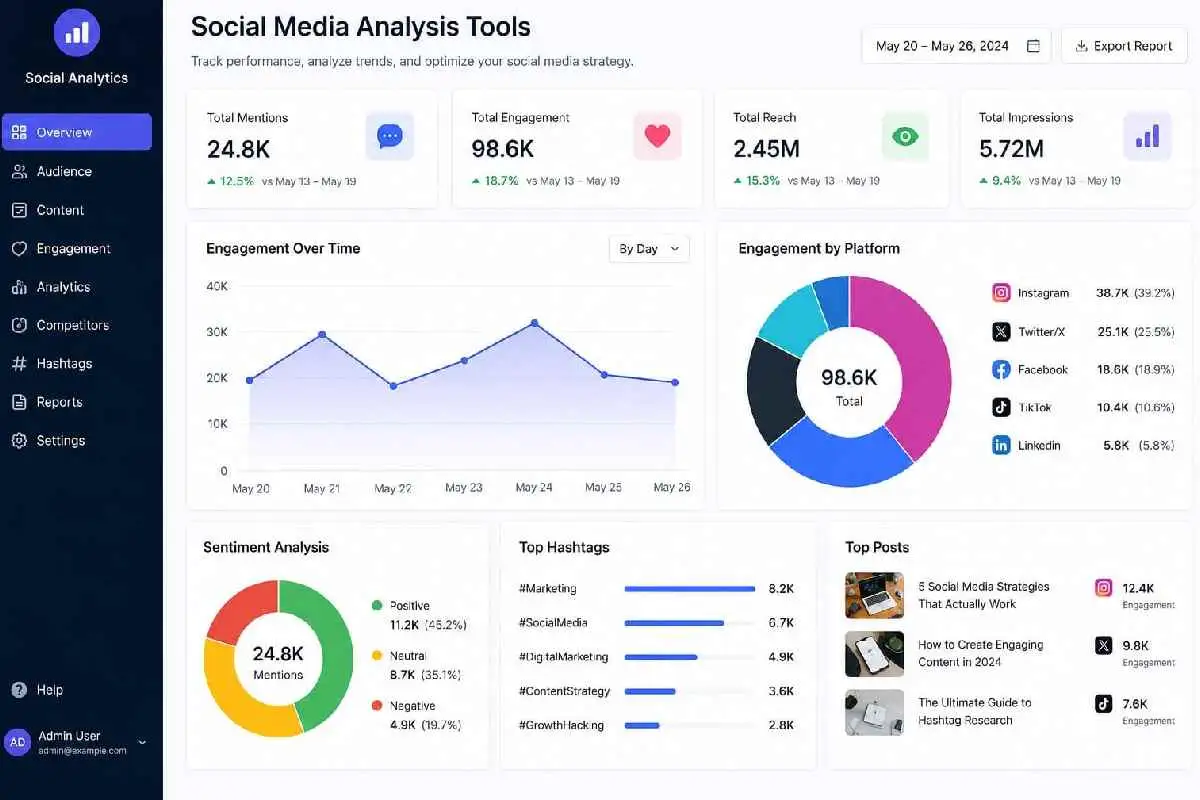
Social Media Analytics Tools are essential for companies and marketers who wish to assess their performance and increase the efficiency of their campaigns and activities. By 2026, there will be vast amounts of data generated by social media platforms; therefore, analytics software will be needed to process all data. According to your requirements, you can choose to analyze one brand page, one of your social media marketing campaigns, or several brands simultaneously. Nowadays, advanced analytics tools provide much more than just statistics on your followers.
📈 This article is part of our
Social Media Tools
Why Social Media Analytics Matters
Marketing on social media without the help of analytics is like driving a car unthinkingly without having a look at your dashboard. Through the use of analytics, business organizations are able to understand which types of content, channels, and marketing strategies are most effective in accomplishing their goals.
Social media analytics is one part of a broader ecosystem of social media tools that can help businesses monitor performance, understand audiences, and improve their marketing strategies.
Benefits of Social Media Analytics
- Calculate the performance of campaigns accurately
- Identify the most effective types of content
- Obtain information about the behavior preferences of customers
- Effective scheduling of brand awareness campaigns
- High-quality engagements
- Less consumption of advertising budgets
- Simpler reporting to clients
- Taking data-driven decisions
Role of Analytics in Business Development
Regular analysis of social media data allows business organizations to detect trends, develop suitable content strategies, and make appropriate allocations of available resources. The use of analytics tools changes the effort from guessing to marketing.
ROI Measurement Through Analytics
Once analytics reveal the best times and days to reach your audience, social media scheduling can help you publish content consistently and maintain an effective posting strategy.
| KPI | Formula | Purpose |
| Return on Investment (ROI) | (Revenue − Cost) ÷ Cost × 100 | Measures overall campaign profitability |
| Conversion Rate | Conversions ÷ Clicks × 100 | Evaluates campaign effectiveness |
| Cost Per Lead (CPL) | Total Spend ÷ Leads Generated | Assesses lead acquisition cost |
| Revenue Attribution | Revenue from Social Media Campaigns | Tracks business impact from social channels |
Key Metrics Every Marketer Should Track
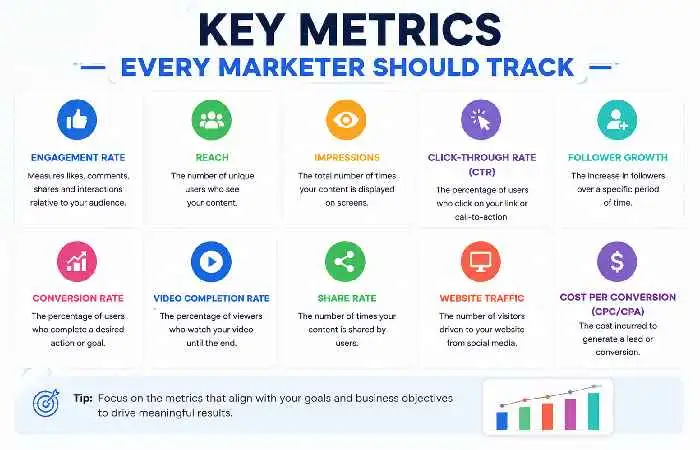
Proper identification of social media metrics is crucial for marketers to find out if the marketing activities have achieved their organizational goals or not. Despite the fact that vanity metrics, such as the number of followers, may help give an initial impression about the progress made, performance metrics can tell how the audience engages with the content provided and if any actions are taken because of that.
Essential Social Media Metrics
| Metric | What It Measures | Why It Matters |
| Appointment Rate | Likes, comments, shares, and connections relative to the spectators’ size | Shows how well content resonates with workers |
| Reach | Number of sole workers who see content | Measures brand visibility and awareness |
| Impersonations | Total number of times the content is displayed | Indicates overall exposure across platforms |
| Click-Through Rate (CTR) | Percentage of operators who click a link | Evaluates the effectiveness of calls-to-action |
| Follower Growth Rate | The rapidity at which new followers are gained | Ways to expand the audience over time |
| Conversion Rate | Percentage of employers who complete a desired action | Events, business impact, and campaign success |
| Video Completion Rate | The percentage of spectators who watch a video until the end | Indicates content quality and audience interest |
| Share Rate | The incidence at which content is shared | Reproduces content value and viral potential |
| Website Traffic | Visitors are drawn from social platforms to a website | Measures the effectiveness of traffic-generation efforts |
| Cost Per Conversion (CPC/CPA) | Cost is obligatory to generate a lead or a sale | Helps evaluate advertising competence and then ROI |
Best Social Media Analytics Platforms
The use of appropriate social media analytics tools helps organizations get deeper insights into their performance and engagement with users. Unlike older tools, which are limited to only analyzing engagement statistics, the new generation of social media analytics tools is able to give deep insights into various areas such as demographics, competitors’ performance, the effectiveness of content published, and the return on investment of campaigns run.
Hootsuite Analytics
The Hootsuite Analytics solution is one of the most powerful social media reporting tools today. With the ability to monitor performance on all social networks from one central dashboard, this tool provides custom reporting and collaboration options for marketers.
Features:
- Multiple social network performance monitoring
- Customizable reporting dashboard
- Benchmark against competitors
- Automated reporting
- Team collaboration features
Sprout Social
The Sprout Social solution allows organizations and agencies to perform advanced reporting on customer behavior and other critical information on their audience.
Features:
- Powerful audience analytics
- Social listening capability
- Sentiment analysis
- Customizable reporting dashboard
- Multiple social network performance monitoring
Metricool
Metricool is popular among users due to its cheapness and detailed analytics. The platform consolidates all analytics from social media, website, and advertising campaigns into one software.
Features:
- Multi-channel analytics
- Competitive analysis
- Advertising campaigns analytics
- Content analytics
- Website traffic analysis
Buffer Analyze
Being easy-to-use, this analytics software can be called the most appropriate one for small business owners and marketers just starting their careers in online marketing and analytics.
Features:
- An intuitive dashboard
- Social media engagement analysis
- Individual post-performance analysis
- Audience analysis
- Reporting tools
SocialPilot
Specifically created for agencies and marketing departments working with several clients at once, this platform provides great options for analytics and client management.
Features:
- White Labeled Reporting
- Reports On Clients’ Accounts
- Reports Automation
- Easy Team Collaboration
Social Media Analytics Platform Comparison
| Platform | Best For | Reporting Features | Competitor Analysis | AI Insights |
| Hootsuite Analytics | Businesses & Agencies | Advanced | Yes | Yes |
| Sprout Social | Enterprise Brands | Advanced | Yes | Yes |
| Metricool | Small to Medium Businesses | Advanced | Yes | Yes |
| Buffer Analyze | Beginners & Small Businesses | Moderate | Limited | No |
| SocialPilot | Agencies & Freelancers | Moderate | Limited | Yes |
Using Analytics to Improve Engagement
With the help of social media analytics, marketers can find out what kind of content would work well for their target audience and why. With regular performance analysis, companies will be able to formulate their content strategy and reach out to their audiences in a better manner.
Discover Highly Engaged Content
With the help of analytics, one can identify posts that get the maximum interaction. Analyzing such successful content will help marketers plan further posts.
Benefits of Content Performance Analysis:
- Content format discovery
- Topic discovery
- Audience preference discovery
- Future content planning
- Engagement rate improvement.
After analyzing social media performance, marketers can use AI content generation tools to create and refine posts based on audience interests and engagement insights.
Determine Best Post Timing
Analytics also helps to discover the time when the target audience is most active on the platform. It will help in increasing the visibility of your content.
Advantages of Post Timing Optimization:
- Larger reach and impressions
- Increased engagement
- Better visibility
- More clicks
- Increased audience participation
Assess Audience Behaviors
The analysis of the audience behaviors makes it possible to create more targeted content, which will be able to attract their attention.
Audience Behaviors To Track:
- Ages
- Location
- Devices used
- Interests/Behaviors
- Active Hours/Days
Test and Improve Content Marketing Plan
It will be possible to carry out tests on the different components of the marketing plan through A/B testing.
Beyond analytics, AI marketing tools can help businesses automate repetitive tasks, identify trends, and make more informed digital marketing decisions.
Components of the Content Marketing Plan to Test:
- Types of Posts
- Caption Length
- #hashtag
- Position of CTA
- Visual Style
Assess Engagement Trends
Tracking the engagement trends is necessary so as not to allow any dip in engagement.
Key Components to Measure Trends In Engagement:
- Engagement rate
- Share rate
- Comment Growth
- Save Rate
- Video Completion Rate
Engagement Optimization Actions
| Analytics Insight | Recommended Action | Expected Outcome |
| Videos receive higher engagement. | Increase video content production. | More interactions and shares |
| The audience is active in the evenings | Schedule posts during peak hours | Higher reach and visibility |
| Low click-through rate | Improve calls-to-action | Increased website traffic |
| Certain topics outperform others. | Create more related content. | Better audience engagement |
| High mobile audience percentage | Optimize content for mobile viewing | Improved user experience |
| Declining engagement rate | Refresh content strategy | Recovery in audience interaction |
Reporting Social Media Performance to Clients

It is critical to report the performance of your social media activities to your clients, as this can help show your clients how valuable your marketing services are. There are certain things you need to include in your reports about your social media performance and how this contributes to achieving the objectives of the company.
For video-focused social media campaigns, creating accurate and accessible captions can improve the viewing experience. Learn how to create professional YouTube subtitles with AI to make video content more accessible and engaging.
Elements to Include When Reporting to Clients
- Executive summary of campaign performance
- Growth and followers trend
- Metrics on reach and impressions
- Statistics on engagements
- Website traffic from social media platforms
- Led and conversion numbers
- Performance of your content pieces
- Recommendations for further campaigns
Create an Executive Summary
An executive summary gives a brief overview of the important information and the achievements made throughout the social media campaign. It should also mention any challenges faced in the process.
An executive summary will make it calmer for your clients to see what outcomes have been achieved by bringing all the facts in one place.
Growth and Engagement KPIs
As you are looking to measure growth and engagement, mention certain limits such as follower count, appointment rate, reach, impressions, and communication numbers.
By giving a perspective of these KPIs relative to past periods, your clients can determine their progress.
Showcase Best Performing Posts
You can show the client the posts that performed better than other posts. In that way, you will make sure your client understands what is working well with them. Mention a few posts that performed well and why.
It could be because of:
- Type of post
- Topic of post on social media
- Time when the post was shared
- Audience response to the post
- Calls-to-action used in the post
Relate Social Media KPIs to Business Metrics
Social media metrics will hold no value unless they relate to the business goals. Discuss the information concerning the performance of campaigns and whether these were fruitful in creating traffic, leads, or conversions.
Recommendations for Improvement
Every report needs to offer some suggestions for improvement. The tips will help you enhance the performance of future campaigns.
Approvals can include:
Suggestions may include:
- Adjusting posting schedules
- Increasing video content
- Testing new content formats
- Refining audience targeting
- Optimizing advertising campaigns.
Conclusion
It is extremely important to employ social media metrics analysis in evaluating the effectiveness of any performance, user behavior, and even marketing optimization. With accurate measurements, an organization will be in a better place to develop strategies aimed at improving user engagement, content strategy development, and ROI maximization. Modern analytics software has made it easier for organizations to gain insightful information from reporting, competitor analysis, and intelligent algorithms.
Fahmeena Begum is a Digital Marketing & Technology Writer at Web Digi Marketing with 3+ years of writing experience. Her work covers digital marketing, SEO, content marketing, business growth, digital tools, artificial intelligence, software and emerging technologies.
View Author Profile →
Sameena Begum is a health, technology and digital content reviewer with 8 years of experience. Her review work focuses on editorial clarity, factual presentation, consistency and reader usefulness across technology and digital subjects.
View Reviewer Profile →