
Fahmeena creates clear and practical content across digital marketing, technology, business growth and emerging digital trends.

Sameena reviews digital content for clarity, factual presentation, consistency and overall reader usefulness.
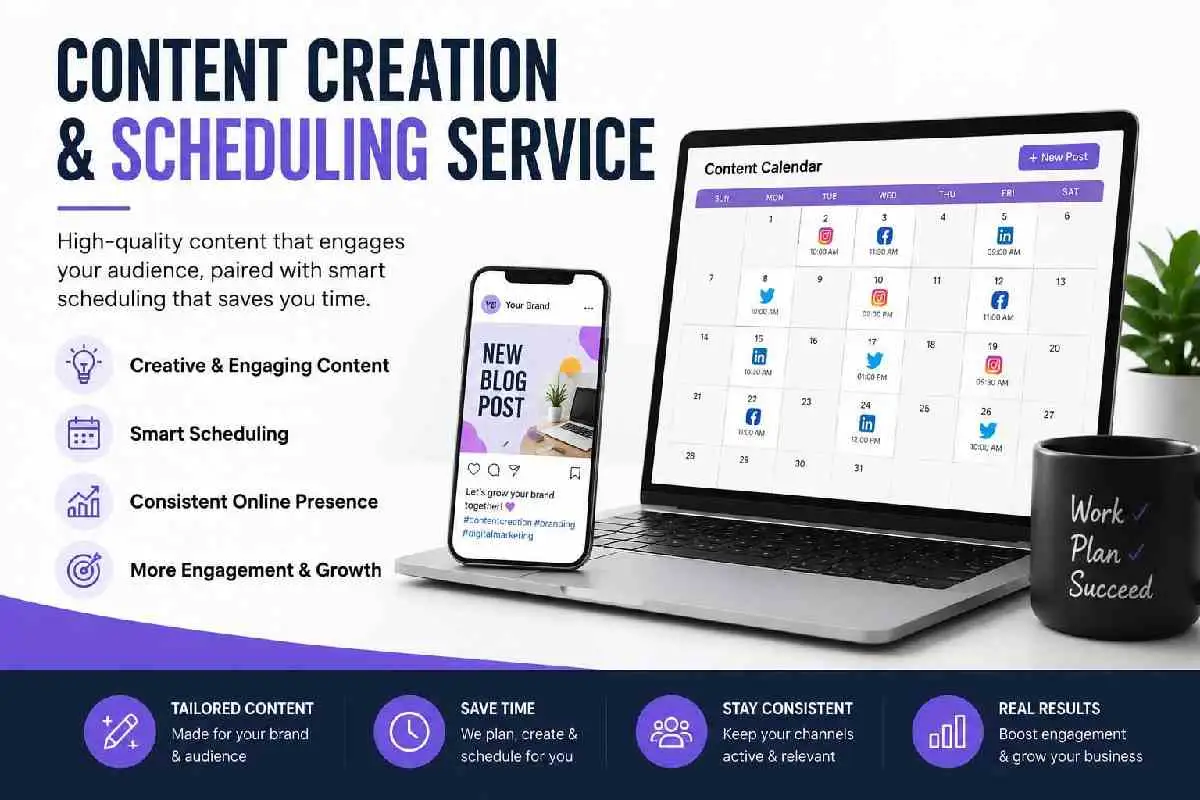
The Content Creation & Scheduling service offers businesses the opportunity to maintain their social media activity online without having to devote hours to the creation and scheduling process themselves. In 2026, no matter what company or brand creates high-quality content regularly, they are sure to get more consumer trust, engage their audience, and generate new leads. As for the freelance social media manager, they will be able to produce high-quality content, schedule its posting, and make it work effectively.
💼This article is part of our
Social Media Marketing
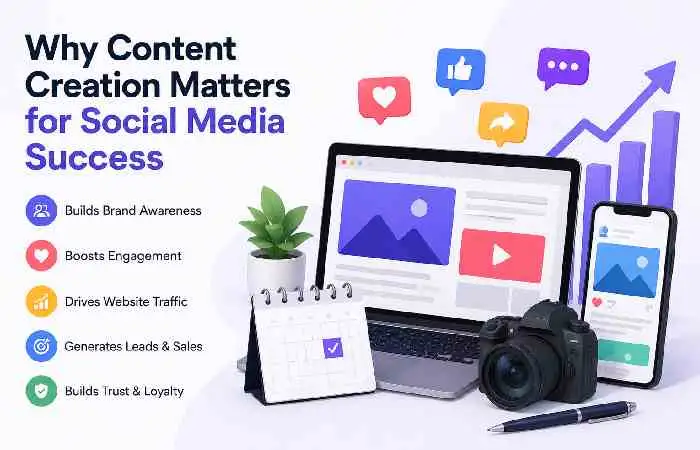
Why Content Creation Matters for Social Media Success
 Content creation works best when it is combined with planning, publishing, audience engagement, and performance tracking. Businesses can therefore consider social media management services that bring these activities together under one strategy.
Great social media requires great content. Without a proper content marketing strategy, it will be impossible to stand out in today’s world, even for such top-notch product or service providers.
Professional content marketing ensures that all your social media publications are not only related to your brand but also are relevant to your targeted audience.
Benefits of Content Marketing
Promotes Consistent Branding
Consistent branding means consistency in visual identity, messages, and regular postings of new content.
Increases Interaction
Great content will result in high engagement with your social media content.
Generates Qualified Leads
Effective content marketing attracts leads along the way of their customer journey.
Makes Your Company a Leader in the Industry
Knowledgeable and informative content positions your business as a leader in your niche.
2026 Content Marketing Impact Statistics
Creating valuable content is only part of the process; optimizing that content for search and social platforms can improve its discoverability. A platform-specific SEO strategy can help tailor content to the way users search and engage on each network.
| Metric | Businesses Using Content Strategy | Businesses Without Strategy |
| Average Engagement Rate | 5.8% | 2.1% |
| Lead Generation Growth | 63% | 27% |
| Brand Awareness Increase | 71% | 34% |
| Customer Retention Rate | 68% | 42% |
Types of Content That Drive Engagement
Not all content is made equal. A good strategy involves using various types of content in order to connect with different segments of the audience.
Educational Content
Educational content answers common questions from customers and offers helpful advice.
Includes:
- How-tos
- Tutorials
- Business tips
- Lists
- Video explanations
Entertaining Content
Entertainment can assist with brand visibility and sharing.
Includes:
- Memes
- Participation in trending topics
- Behind-the-scenes videos
- Interactive content
Choosing the right subjects is equally important, so marketers should follow relevant digital marketing topics and industry trends when developing content ideas.
Promotional Content
Promotional content attracts attention to crops, services, special deals, and achievement stories.
Includes:
- Product introductions
- Special offers
- Case studies
- Testimonials
User-Generated Content (UGC)
UGC creates a more authentic connection.
Includes:
- Customer reviews
- Pictures from customers
- Success stories
- Highlights from communities
Content Performance Comparison
| Content Type | Engagement Potential | Lead Generation Potential | Best Platforms |
| Educational | High | High | LinkedIn, Facebook |
| Video Content | Very High | Medium | Instagram, TikTok |
| User-Generated Content | High | High | Instagram, Facebook |
| Promotional Posts | Medium | Very High | All Platforms |
| Interactive Content | Very High | Medium | Instagram, Stories |
Social Media Content Scheduling Best Practices
Benefits that business organizations gain from the use of social media content scheduling include consistency in their content, engaging their audience, and time savings. They can create a plan and agenda their content, without the need to post every day physically.
Create a Regular Posting Schedule
Consistency is probably the key factor in any successful social media marketing strategy. Posting content on schedule shows the audience and the platform’s algorithm that you are an active user.
Benefits of regular posting:
- Improves brand reputation
- Builds trust and loyalty among the audience
- Grows brand recognition
- Fosters growth in the long run
Plan Content with a Monthly Calendar
A monthly calendar helps understand what kind of content you will be posting over the month, and in which campaigns or promotions you will be participating.
What to include in your content calendar:
- Posting date
- The theme of your content
- Platform(s) where the post will be published
- Purpose of each campaign
- Content visuals
Post During Times When Your Audience Is Most Active
You will gain greater reach and effectiveness with your posts by analyzing the insights from several social media networks in order to post at the perfect time.
Commonly, some of the most active times for engagement include the following:
- Morning time before the day’s work starts
- Lunch time
- Evening browsing time
- The weekend leisure time
Maintain a Combination of Several Forms of Content
An excellent calendar of social media involves a mix of different kinds of content, including educational, promotional, entertaining, and communal content.
Make Use of the 50-30-20 Approach.
There is an easy way through which you can balance your content, and that is through the formula below;
- 50% Education Content – Tips & Guides
- 30% Engage Content – Questions and Polls
- 20% Promotion Content
Automate Scheduling Using Professional Tools
Scheduling tools assist businesses in scheduling their content and coordinating posts on multiple social media platforms through collaboration and automation.
Advantages of using scheduling tools:
- Conserve time on daily postings
- Promote consistency in posting
- Efficient in managing several social media accounts
- Offer performance analytics
Analysis of Performance and Optimization
Your schedule mustn’t remain static. Regularly analyzing your performance lets you know what works and allows you to optimize your future schedule. These are some performance measures that you need to consider:
- Engagement rate
- Impressions
- Click-through rate (CTR)
- Followers growth rate
- Conversions rate
Tools for Managing Content Calendars
Scheduling and managing your social media posts is easy to do when you have the help of tools that manage social media schedule management. Through the aid of social media scheduling tools, you can plan and schedule posts, work together with other team members, and monitor your progress.
Brands that need to produce content consistently across multiple platforms may also benefit from working with a dedicated social media marketing team that can coordinate strategy, content creation, publishing, and campaign management.
| Tool | Best For | Key Features | Free Plan | Starting Price |
| Buffer | Small Businesses | Post scheduling, analytics, and content planning | Yes | Affordable |
| Hootsuite | Agencies & Enterprises | Multi-platform management, team collaboration | Limited | Premium |
| Later | Visual Content Planning | Drag-and-drop calendar, Instagram scheduling | Yes | Mid-range |
| Sprout Social | Advanced Marketing Teams | Social CRM, analytics, reporting | No | Premium |
| Metricool | Growing Businesses | Scheduling, analytics, competitor tracking | Yes | Affordable |
| SocialBee | Content Recycling | Category-based scheduling, automation | Trial | Mid-range |
For businesses targeting customers in specific geographic areas, content can also support local SEO for social media marketing, helping strengthen local visibility and connect with nearby audiences.
Measuring Content Performance

The measurement of content performance is an important aspect for businesses in terms of knowing if they have met their objectives with regard to their social media campaigns. Businesses can measure their ROI with regard to social media efforts by using some important metrics, which will allow them to know what works and how to proceed in the future.
Engagement Metrics
These metrics indicate the level of user engagement and interaction, and their engagement with your content. They also give an indication of how well the content relates to your audience.
Some engagement metrics you may consider tracking include:
- Reactions and likes
- Comments
- Sharing
- Saving
- Videos
Reach and Impressions Metrics
Reach refers to the number of unique individuals who have seen your content, whereas impressions refer to the total views your content has received.
Why Track These Metrics?
- Measurement of audience reach
- Conception of top-performing content
- Better distribution of content
Click-through and Conversion Metrics
These metrics help in understanding whether your content is delivering value other than just engagement.
Conversion metrics you should track:
- The number of site visits
- The filling of lead forms
- Newsletter subscriptions
- Product purchase
- Product demo requests
Follower Growth Metrics
When content is aligned with audience needs and measurable marketing objectives, it can contribute directly to business growth strategies by increasing visibility, engagement, leads, and conversions.
The follower growth metrics help understand whether your efforts have resulted in growing followers for your account.
The following metrics can be considered when measuring follower growth:
- The acquisition of new followers
- Audience demographics
- (profile visits)
- Loss of followers
Essential Content Performance Metrics
| Metric | What It Measures | Ideal Benchmark (2026) |
| Engagement Rate | Audience interactions per post | 3%–8% |
| Reach | Unique users who viewed content | Growing monthly |
| Impressions | Total content views | Higher than reach |
| Click-Through Rate (CTR) | Link clicks from posts | 1%–5% |
| Conversion Rate | Completed desired actions | 2%–10% |
| Follower Growth Rate | Audience growth over time | 5%–15% monthly |
| Video Completion Rate | Percentage watching the full video | 40%–70% |
| Share Rate | Content shared by users | Increasing trend |
Conclusion
In order to establish an impactful social media presence in 2026, businesses need to invest in content creation and scheduling. The process of creating content and scheduling allows businesses to increase their social media presence by creating engaging content. This way, they can attract more customers and create better relationships with them.
Businesses, especially small and medium-sized organizations, have to spend a lot of time and energy creating and publishing quality content for their social media accounts. However, it makes sense for organizations to outsource their content creation and scheduling efforts since it is both cost-effective and allows for higher ROI.
Fahmeena Begum is a Digital Marketing & Technology Writer at Web Digi Marketing with 3+ years of writing experience. Her work covers digital marketing, SEO, content marketing, business growth, digital tools, artificial intelligence, software and emerging technologies.
View Author Profile →
Sameena Begum is a health, technology and digital content reviewer with 8 years of experience. Her review work focuses on editorial clarity, factual presentation, consistency and reader usefulness across technology and digital subjects.
View Reviewer Profile →